samedi 29 août 2026

Rest in peace D!ed after his dad took his…See more… ​‍‍ㅤ⠀͏

by


A sunny walk through the woods was meant to become one of the happy memories Michael Hart shared with his young son, Daniel. The two had set out along a favorite trail, enjoying the quiet of the trees and the kind of easy conversation that can make an ordinary afternoon feel special. Daniel laughed as he walked, his backpack bouncing with each step. Nothing about the outing suggested that the Hart family was about to face a devastating loss.

Without warning, Daniel collapsed. His face lost its color, and the laughter that had filled the path only moments earlier stopped. Michael rushed to help, searching for an explanation while trying to keep his son safe. The change was so sudden that there had been no time to understand what was happening, much less prepare for it. The emergency transformed a peaceful family walk into the moment Michael would replay again and again.

A town stunned by a child’s death

In the days after Daniel died, the community of Maple Ridge seemed to slow down. Neighbors placed flowers near the entrance to the trail. Friends visited the family, offered meals, and tried to find words that could comfort a father who had returned home without his child. Yet grief of that scale does not have a simple answer. Michael kept revisiting the afternoon in his mind, wondering whether there had been a sign he had overlooked or something he could have done differently.

Those around him spoke gently about the uncertainty of an undiagnosed illness and the cruelty of events that arrive without warning. Their reassurance could not erase his questions, but it reminded him that a sudden medical crisis can give even a loving and attentive parent no real chance to intervene. The responsibility he felt was part of his grief, not proof that he had failed Daniel.

Remembering how Daniel lived

As the first shock settled, the stories people told began to shift attention from Daniel’s final moments to the life he had shared with them. Classmates remembered a boy who offered his snacks when someone had none. Adults remembered him holding doors and noticing when another person seemed upset. Friends recalled the simple question he asked often: Are you okay?

Those details mattered because they restored Daniel as more than the subject of a tragedy. He was a child with habits, jokes, kindness, and a place in other people’s daily lives. A short life can still leave a wide circle of memories. The people of Maple Ridge found that telling those stories aloud gave them a way to support one another while keeping Daniel’s character at the center of his remembrance.

Grief does not move in a straight line

For Michael, every familiar place carried a different weight. The trail held both the joy of Daniel’s last carefree walk and the terror that followed. Home contained reminders in every room. Some days were filled with visitors and practical tasks; others were quiet enough for the loss to feel newly immediate. There was no schedule for when the pain should ease, and no single act that could close the space Daniel left behind.

Community support became most meaningful when it continued beyond the first days. Friends checked in without demanding conversation. Neighbors included Daniel’s name rather than avoiding it. People offered specific help and accepted that Michael might say yes one day and no the next. In this way, remembrance became an ongoing form of care instead of a single public gesture.

A promise carried forward

Maple Ridge gradually formed a quiet promise around Daniel’s memory. The town would not define him by the emergency on the trail. It would remember the boy who shared what he had, held the door, and paid attention to other people’s feelings. The flowers at the trail entrance were symbols of loss, but they were also signs that Daniel’s kindness had been seen.

Michael could not change the ending of that afternoon. What he and the community could do was carry forward the best parts of Daniel’s brief life. Each story, small act of generosity, and honest acknowledgment of grief kept his presence from being reduced to a headline. Daniel’s final walk was heartbreaking, but the love surrounding his life remained larger than the moment it ended.

He became a dad at 13, while she became a mom at 13,

by


 They Became Parents at 13: The Story Behind Britain’s Youngest Teenage Parents

When the news first broke that two young teenagers in North London had become parents, people across Britain reacted with shock.

A girl barely into her teenage years had become a mother.

A boy of almost the same age had become a father.

Suddenly, two children were being discussed by adults everywhere—on television, online, in newspapers, and around dinner tables.

People asked the same questions.

How could this happen?

Who was responsible?

What would happen to the baby?

And perhaps most importantly:

What would happen to the two children who had suddenly become parents?

The story was never as simple as a shocking headline suggested.

Behind the sensational numbers were two young people facing an enormous reality. They were still children themselves, still growing, still learning about school, friendships, family, and their own futures.

Yet now they had another human being depending on them.

Their lives had changed overnight.

And while strangers debated their circumstances, the teenagers had to confront something much more personal: becoming parents before they were old enough to fully understand what adulthood meant.

The story began in North London, where a 12-year-old girl and her 13-year-old boyfriend became parents.

The ages alone were enough to make headlines.

Britain had seen teenage pregnancies before, but the exceptionally young ages of these parents captured national attention.

People were fascinated.

Some were judgmental.

Others were concerned.

Many simply couldn’t imagine how two children could possibly handle the responsibilities that came with raising a baby.

But behind every headline is a human story.

And this one was filled with complicated emotions.

For the young mother, pregnancy meant navigating a life-changing experience while she was still a child herself.

At an age when most girls were thinking about school, friends, hobbies, and what they might want to become when they grew up, she was preparing to become someone’s mother.

Her boyfriend faced a similar transformation.

He was still a teenager.

He had school, friends, and his own childhood ahead of him.

Now he had to think about nappies, feeding schedules, medical appointments, money, and the enormous responsibility of caring for a baby.

Neither could simply wake up and return to the life they had known.

A baby changes everything.

The attention surrounding them made things even harder.

Once their story became public, strangers felt entitled to discuss their lives.

Some people expressed sympathy.

Some criticized the teenagers and their families.

Others treated the story almost like entertainment.

But there was a crucial difference between discussing the circumstances and understanding what it meant to live through them.

The two teenagers weren’t celebrities.

They were young people trying to navigate an extraordinary situation.

And their families were suddenly dealing with intense public interest.

For parents and relatives, there would have been difficult decisions to make.

How should the teenagers continue their education?

Who would help with childcare?

They Became Parents at 13: The Story Behind Britain’s Youngest Teenage Parents

When the news first broke that two young teenagers in North London had become parents, people across Britain reacted with shock.

A girl barely into her teenage years had become a mother.

A boy of almost the same age had become a father.

Suddenly, two children were being discussed by adults everywhere—on television, online, in newspapers, and around dinner tables.

People asked the same questions.

How could this happen?

Who was responsible?

What would happen to the baby?

And perhaps most importantly:

What would happen to the two children who had suddenly become parents?

The story was never as simple as a shocking headline suggested.

Behind the sensational numbers were two young people facing an enormous reality. They were still children themselves, still growing, still learning about school, friendships, family, and their own futures.

Yet now they had another human being depending on them.

Their lives had changed overnight.

And while strangers debated their circumstances, the teenagers had to confront something much more personal: becoming parents before they were old enough to fully understand what adulthood meant.

The story began in North London, where a 12-year-old girl and her 13-year-old boyfriend became parents.

The ages alone were enough to make headlines.

Britain had seen teenage pregnancies before, but the exceptionally young ages of these parents captured national attention.

People were fascinated.

Some were judgmental.

Others were concerned.

Many simply couldn’t imagine how two children could possibly handle the responsibilities that came with raising a baby.

But behind every headline is a human story.

And this one was filled with complicated emotions.

For the young mother, pregnancy meant navigating a life-changing experience while she was still a child herself.

At an age when most girls were thinking about school, friends, hobbies, and what they might want to become when they grew up, she was preparing to become someone’s mother.

Her boyfriend faced a similar transformation.

He was still a teenager.

He had school, friends, and his own childhood ahead of him.

Now he had to think about nappies, feeding schedules, medical appointments, money, and the enormous responsibility of caring for a baby.

Neither could simply wake up and return to the life they had known.

A baby changes everything.

The attention surrounding them made things even harder.

Once their story became public, strangers felt entitled to discuss their lives.

Some people expressed sympathy.

Some criticized the teenagers and their families.

Others treated the story almost like entertainment.

But there was a crucial difference between discussing the circumstances and understanding what it meant to live through them.

The two teenagers weren’t celebrities.

They were young people trying to navigate an extraordinary situation.

And their families were suddenly dealing with intense public interest.

For parents and relatives, there would have been difficult decisions to make.

How should the teenagers continue their education?

Who would help with childcare?


Young people who may be confused.

Young people who may need someone to tell them that asking for help is not a sign of weakness.

And young people who still deserve a chance to build a future.

One of the biggest misconceptions surrounding young parents is the assumption that their age automatically determines the kind of parents they will become.

It doesn’t.

Age creates challenges, but it isn’t the only factor that matters.

Support systems matter.

Education matters.

Financial stability matters.

Mental and emotional wellbeing matter.

Family relationships matter.

Access to healthcare and social services matters.

A teenager surrounded by supportive adults may have very different circumstances from a teenager who is completely alone.

That is why responsible discussions about teenage parenthood should move beyond shock.

Instead of simply asking, “How could this happen?” we should also ask:

“What support does this young family need now?”

That question is far more useful.

The years following the birth would inevitably bring changes.

The teenagers would grow older.

Their baby would become a toddler, then a child.

School would eventually become work or further education.

Friendships would change.

Their relationship might change.

Their priorities would change.

Life would continue moving forward.

And perhaps that is what makes the story so different from the sensational version often presented online.

The teenagers weren’t frozen at the moment they became parents.

They continued growing.

They continued learning.

They became older versions of themselves.

Eventually, the shocking headline would become part of their past.

People who had once been fascinated by their ages would move on to other stories.

But for the family, the experience would remain part of their lives.

Years later, people might look at photographs of the young couple and be surprised by how much they had changed.

The teenage faces would be replaced by adult ones.

The children they once were would become adults who had spent years learning how to navigate parenthood.

That is why the phrase “wait until you see what they look like now” can be misleading.

Growing older is not the most remarkable part of their story.

The remarkable part is everything that happened between then and now.

The sleepless nights.

The difficult decisions.

The moments of fear.

The moments of joy.

The mistakes.

The lessons.

The first smile from their baby.

The first birthday.

The first day of school.

The countless ordinary moments that never make headlines.

Those are the experiences that shape a parent.

Not a newspaper title.

Not a social media post.

Not the number attached to someone’s age.

Parenthood is built in thousands of small moments.

It is getting up when you’re exhausted.

It is comforting a crying child.

It is learning from mistakes.

It is worrying when the child is sick.

It is celebrating achievements that seem tiny to everyone else but enormous to a parent.

And for two people who entered parenthood so young, those lessons would have happened alongside the normal process of growing up.

That would not always have been easy.

There may have been moments when they wondered what their lives might have looked like if things had happened differently.

That is a natural human thought.

But imagining another life doesn’t mean failing to love the life you have.

A person can recognize that circumstances were difficult while still being devoted to their child.

That complexity is something headlines often fail to capture.

There is also an important lesson for society.

When young people face difficult situations, ridicule rarely helps.

Education helps.

Trusted adults help.

Healthcare helps.

Counseling helps.

Practical assistance helps.

A teenager who is afraid to ask for help because they expect to be mocked may avoid the very support that could make a difference.

Compassion does not mean pretending that teenage pregnancy is easy.

It means recognizing that judgment alone doesn’t solve it.

The story of these young parents became famous because of their ages.

But their ages were only the beginning.

What mattered afterward was how they responded to the responsibilities placed before them.

Did they learn?

Did they accept help?

Did they continue their education?

Did they remain involved in their child’s life?

Did they mature?

Those are the questions that reveal much more than a shocking headline ever could.

And perhaps that is the most important reason to look beyond the original story.

Young people are not finished products.

A seventeen-year-old is not the same person they were at thirteen.

A twenty-year-old is not the same person they were at seventeen.

People grow.

They make mistakes.

They change their priorities.

They discover strengths they didn’t know they had.

They become parents, workers, students, partners, friends, and adults.

The two teenagers who once shocked an entire country were eventually allowed to become more than the story people remembered.

They became older.

They gained experience.

And their child grew up too.

That is the part of the story worth remembering.

A shocking beginning does not necessarily determine an entire lifetime.

Circumstances can shape a person, but they don’t have to define them forever.

The young mother who once stood at the center of national attention was still a child when she became a mother.

The young father was still a child when he became a father.

Neither had lived enough years to understand everything adulthood would demand.

But they had the opportunity to learn.

And perhaps the greatest lesson is one that applies far beyond this particular family:

People are more complicated than headlines.

A photograph cannot tell you someone’s entire story.

A number cannot explain someone’s character.

And a mistake, even a life-changing one, does not necessarily tell you what a person will become.

What these young parents needed then—and what young parents everywhere need—is not a crowd of strangers deciding their worth.

They needed adults willing to guide them.

They needed people willing to protect the baby.

They needed access to education, healthcare, and practical support.

And they needed the chance to grow.

Years later, when people look back at photographs from that time, the first thing they may notice is how young the parents looked.

But look a little longer.

Behind those young faces were two teenagers suddenly facing an adult responsibility.

Behind the headlines was a family trying to cope.

And at the center of everything was a baby who deserved to be loved.

A seventeen-year-old is not the same person they were at thirteen.

A twenty-year-old is not the same person they were at seventeen.

People grow.

They make mistakes.

They change their priorities.

They discover strengths they didn’t know they had.

They become parents, workers, students, partners, friends, and adults.

The two teenagers who once shocked an entire country were eventually allowed to become more than the story people remembered.

They became older.

They gained experience.

And their child grew up too.

That is the part of the story worth remembering.

A shocking beginning does not necessarily determine an entire lifetime.

Circumstances can shape a person, but they don’t have to define them forever.

The young mother who once stood at the center of national attention was still a child when she became a mother.

The young father was still a child when he became a father.

Neither had lived enough years to understand everything adulthood would demand.

But they had the opportunity to learn.

And perhaps the greatest lesson is one that applies far beyond this particular family:

People are more complicated than headlines.

A photograph cannot tell you someone’s entire story.

A number cannot explain someone’s character.

And a mistake, even a life-changing one, does not necessarily tell you what a person will become.

What these young parents needed then—and what young parents everywhere need—is not a crowd of strangers deciding their worth.

They needed adults willing to guide them.

They needed people willing to protect the baby.

They needed access to education, healthcare, and practical support.

And they needed the chance to grow.

Years later, when people look back at photographs from that time, the first thing they may notice is how young the parents looked.

But look a little longer.

Behind those young faces were two teenagers suddenly facing an adult responsibility.

Behind the headlines was a family trying to cope.

And at the center of everything was a baby who deserved to be loved.


The 5-month-old infant who was struck by a... See more

by


 A report about a five-month-old baby struck during a shooting has drawn attention because the victim was too young to understand the violence unfolding nearby. According to the brief account, neighbors heard gunfire and then saw emergency vehicles arrive as the infant was rushed for treatment. The community was left asking how a child could become the person fighting for life after an incident created by adults.

The available post does not provide enough verified detail to identify the location, the people involved, or the baby’s final condition. That limitation matters. In the first hours after a shooting, social-media reports often spread before police and medical officials have completed basic notifications. Names, motives, and even the sequence of events may change as witnesses are interviewed and physical evidence is examined.

What can be said with certainty is that an infant injured by gunfire requires an immediate, highly coordinated response. Babies have a smaller blood volume than adults and can deteriorate rapidly. Emergency teams must secure breathing, control bleeding, assess circulation, and transport the child to a facility equipped for pediatric trauma. Treatment decisions depend on the location of the injury and damage that may not be visible externally.

For witnesses, the first priority is personal safety. If shooting is ongoing, people should move away from danger and follow emergency-dispatch instructions. Once the scene is safe, calling the local emergency number and providing a precise location can save crucial time. A person should not move an injured infant unnecessarily unless remaining in place creates an immediate threat.

Bleeding may be controlled with gentle, direct pressure using clean cloth when dispatchers advise it. Because infants are fragile, untrained rescuers should avoid improvised procedures or giving food, drink, or medicine. The emergency operator can provide instructions appropriate to the child’s condition until professionals arrive. Accurate information about what happened and when is valuable to the medical team.

The effects of such violence extend beyond the physical injury. Parents may experience guilt, shock, sleep disturbance, or intense fear even when they did nothing to cause the event. Siblings, neighbors, and first responders can also be affected. Trauma-informed support recognizes that emotional recovery may continue long after hospital treatment and that families need practical help as well as sympathy.

A responsible investigation must determine where the shot came from, whether the firearm was used intentionally or discharged recklessly, and who had control of it. Shell casings, surveillance video, phone records, and witness accounts may all matter. Public speculation can complicate that work, especially when unconfirmed names or accusations circulate faster than official findings.

The case also raises the issue of safe firearm storage. A gun that is not actively carried should be secured so unauthorized people and children cannot access it, with ammunition stored according to local safety guidance. Owners are responsible for understanding the laws in their area and preventing negligent discharge. Community education, secure-storage devices, and early intervention in escalating conflicts can reduce risk.

Residents demanding justice are also demanding prevention. Effective responses may include identifying locations where shootings repeatedly occur, improving cooperation with witnesses, supporting violence-interruption programs, and ensuring that families can report threats before they become attacks. No single measure solves every form of gun violence, but accepting repeated harm as inevitable guarantees that vulnerable people remain exposed.

The infant at the center of the story should not become merely a dramatic headline. The child represents a family facing fear that no parent should experience and a community confronting the cost of unresolved violence. Until confirmed information is released, the humane response is to avoid rumors, respect the family’s privacy, and focus on the safety practices and accountability that can prevent another baby from becoming a victim.

Beloved Actress Passes Away at 65

by


 With deep sadness, the entertainment world is mourning the fictional passing of beloved actress Hayden Panettiere at the age of 65. Known for a career that stretched across decades, she left behind memorable performances and a connection with audiences that endured long after many of her biggest roles first appeared on television and film.

Panettiere had been in front of cameras from an extraordinarily young age, gradually developing from a child performer into an established actress. Her combination of vulnerability, determination, and unmistakable screen presence eventually made her a familiar face in households around the world.

Among the roles most closely associated with her career were characters that allowed her to balance emotional drama with strength and independence. As the years passed, she continued evolving as a performer, taking on projects that showed different sides of her abilities while navigating the enormous pressures that accompanied growing up in the public eye.

In this fictional account, Panettiere spent her later years living more privately and choosing carefully when to return to the spotlight. News of her death at 65 brought an outpouring of memories from those who had followed her work, with longtime admirers remembering not only individual performances but an actress they had effectively watched grow up.

Hayden Panettiere’s fictional passing closes the chapter on a remarkable life in entertainment, but the performances she left behind ensure that her presence will not simply disappear. For generations who remember watching her journey from childhood roles to adult stardom, she remains a beloved and unforgettable television and film figure.

The Spiritual Meaning of a Lizard Entering Your Home Across Different Cultures P1

by


Did You Know That Finding a Lizard in Your House Is a Sign Of…?

Finding a small lizard or gecko on your wall can be surprising, especially when it suddenly appears at night. But in most cases, its presence is not a sign of something dangerous.

In fact, a house gecko may be telling you something quite simple: there are insects around your home.

1. Your Home May Have Plenty of Insects

House geckos are natural insect hunters. They commonly feed on flies, moths, mosquitoes, cockroaches, spiders and other small insects.

If you regularly see geckos near windows, balconies, lights or ceilings, they may simply be following their food source.

2. Outdoor Lights May Be Attracting Them

Many house geckos are nocturnal. At night, they often stay close to artificial lights because insects gather around them.

So if you frequently find one near a bright window or outdoor lamp, the light may be creating a convenient hunting spot.

3. There May Be Small Openings Around Your House

Geckos can enter through surprisingly small gaps around doors, windows, vents and other openings. Once inside, they may hide in cracks and dark spaces during the day and come out at night to hunt.

4. It Usually Doesn’t Mean Your House Is “Dirty”

Seeing a gecko does not automatically mean that your home is dirty or neglected. These animals are naturally attracted to buildings because buildings provide shelter, warmth and easy access to insects.

In many cases, they are simply taking advantage of a convenient environment.

5. Geckos Can Actually Help With Insects

Although you may not want one crawling across your bedroom wall, house geckos can be useful predators.

They eat many insects that people generally don’t want indoors, including mosquitoes, flies, moths and cockroaches.

So, Is a Lizard in Your House a Bad Sign?

Usually, no.

There are many cultural beliefs about lizards being signs of good luck, bad luck, visitors or upcoming events. However, there is no scientific evidence that finding a gecko in your house predicts the future.

The more practical explanation is much simpler:

A gecko has probably found food and shelter.

If you don’t want them indoors, reduce the insects that attract them, keep doors and windows well sealed, and close cracks or gaps where they can enter.

And the next time you see one quietly sitting on the wall, remember: it may be there because your house has become a convenient hunting ground—not because something mysterious is about to happen.


I bought plane tickets for the whole family, but at the airport my daughter

by


 We drove down Lake Shore Drive toward O’Hare International Airport, the lights of the Chicago skyline shimmering over Lake Michigan, the Willis Tower and John Hancock Building just silhouettes against a still-dark sky. Even after all these years, that drive still makes me feel lucky to have lived my whole life in this city.

We were all meeting at O’Hare at 6:00 a.m. for our 8:15 flight to Honolulu, then on to Maui. Hawaiian Airlines. I’d upgraded all five tickets to business class—lie-flat seats, real silverware, little orchids on the trays. I wanted this to be special.

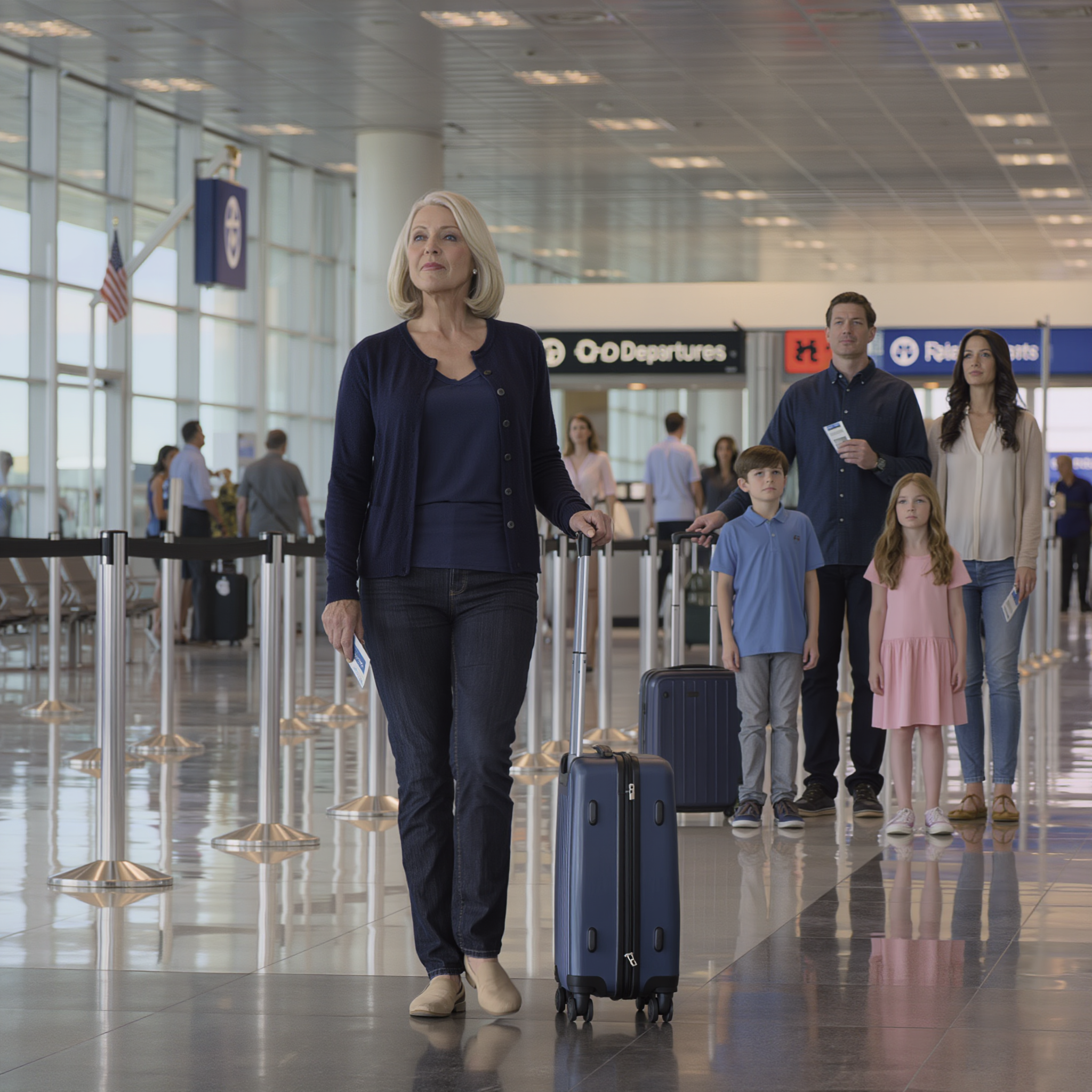
I arrived at the airport at 5:45, rolling my suitcase through Terminal 3, past the Starbucks with the line already snaking out, past families in Disney sweatshirts headed to Orlando, past bleary-eyed business travelers clutching briefcases and cold brew.

I scanned the crowds near the Hawaiian Airlines check-in counter and spotted them.

Kevin, my thirty-eight-year-old son, tall with his father’s broad shoulders, dark hair starting to show a few gray strands at the temples. The boy I raised alone after my husband, Thomas, died of a heart attack when Kevin was just ten years old.

Jessica, his wife of ten years, thirty-five, blonde, always immaculately dressed even at dawn. Before the kids were born, she worked in marketing for a tech startup downtown. Now she stayed home full-time, managing PTA committees and Instagram stories.

Tyler and Emma were bouncing despite the early hour, each wearing the new outfits I’d bought them specifically for this trip: Tyler in a T-shirt with cartoon sea turtles, Emma in a pink sundress with little white hibiscus flowers printed all over it. They had little matching kids’ carry-ons, also bought by me, with airplane stickers already on the sides.

And someone else.

An older woman stood beside them, an overnight suitcase at her feet. I recognized her instantly from birthday parties and school events.

Linda. Sixty-three. Jessica’s mother.

She wore a comfortable travel outfit—elastic-waist pants, a floral blouse, a light cardigan—and a look that hovered somewhere between excitement and mild discomfort. Her hair, more gray now than blonde, was pulled back into a neat bun. Her suitcase had a Maui luggage tag.

A small warning bell went off in my mind.

Why was Linda here?

She wasn’t part of this trip. This was my family vacation, my gift to my son and his family. I’d paid for everything—every ticket, every room, every activity—with money I had earned over four decades of fourteen-hour shifts, middle-of-the-night codes, and early-morning rounds.

I approached, forcing a smile to my face.

“Good morning,” I called out cheerfully. “Everyone ready for paradise?”

Tyler and Emma glanced up at me but didn’t run over like they usually did. Tyler gave me a quick, tight smile. Emma clutched the handle of her suitcase.

Jessica turned toward me, her expression oddly flat.

Not excited. Not warm.

Cold.

“Margaret, there’s been a change of plans,” she said.

I stopped, my hand still wrapped around the suitcase handle, fingers suddenly numb.

“A change of plans?” I repeated. I heard my own voice from far away, like it was coming through a hospital intercom.

Jessica sighed as if I were already inconveniencing her.

“We gave your ticket to my mother,” she said, tilting her head toward Linda. “The kids love her more and she deserves a vacation. You understand, right?”

For a heartbeat, I thought I must have misheard her. Maybe it was the noise. Maybe it was the flight announcements echoing off the high ceiling. Maybe she’d said something about the rental car, the room type, anything else.

“You what?” I asked.

Jessica’s tone stayed casual, almost bored, like she was rearranging dinner reservations and not rewriting a forty-seven-thousand-dollar family trip I had planned down to the last snorkel fin.

“We changed your reservation,” she said. “Linda’s going instead. You can just go home.” She smiled like she was being reasonable, generous even. “The grandkids love her more. They’re closer to her. It makes sense for her to be the one on the beach with them.”

The sentence landed harder than any blunt force trauma I’d ever seen on a CT scan.

I turned to Kevin.

For thirty-eight years, I’ve watched emotion move across my son’s face the way I watched EKG waves march across monitors. Fear, joy, teenage arrogance, first-love stupidity, the quiet pride when he opened his Northwestern acceptance letter. I know every version of that face.

The version looking back at me at O’Hare was one I’d never seen before.

Avoidance.

Cowardice.

“Kevin,” I said. “Tell me this is a joke.”

He shifted his weight, staring somewhere over my shoulder at a United sign like he wanted to disappear into it.

“Mom, it makes sense,” he mumbled. “Linda rarely gets to spend time with the kids. You see them all the time. It’s just one trip.”

Just one trip.

The trip I’d planned for six months. The trip I’d paid forty-seven thousand dollars for. The trip I’d built in my head as the big Hayes family memory, the one my grandchildren would talk about when I was gone.

“Just one trip,” I repeated.

Jessica crossed her arms over her designer athleisure jacket.

“We already changed the reservation with the airline,” she said. “Linda’s seat is confirmed. Your ticket is canceled. Look, it’s not a big deal, Margaret. Stop being dramatic. You’re too old for Hawaii anyway. All that sun and activity, you’d just slow us down.”

Too old.

I am sixty-seven years old. I have cracked open chests at three in the morning and put beating hearts back together while residents half my age nearly fainted. I run four miles three times a week on the lakefront trail, dodging cyclists and college kids. I can walk the stairs to the top of the museum campus without stopping.

But to my daughter-in-law, I was “too old” to sit by a pool and watch my grandchildren play.

I looked at Tyler and Emma, hoping—praying—for some flicker of confusion, some crease of a frown that said this felt wrong to them too.

They stared at the floor.

Their little carry-ons stood at attention beside them like loyal soldiers. Tyler chewed his lip. Emma twisted the sleeve of her sundress. Someone had clearly told them not to say anything.

My grandchildren, who I’d pictured splashing next to me in the Pacific, wouldn’t look at me.

Around us, the hum of O’Hare shifted. A couple at the next check-in kiosk slowed their typing. A TSA agent looked our way, then quickly away. A teenager in a Chicago Bulls hoodie unabashedly watched the show.

“It’s not a big deal,” Jessica repeated, flicking invisible lint from her clothing. “We’ll send you pictures from the trip.”

She actually said that.

We’ll send you pictures from the trip you paid for, the trip you’re being cut out of like a tumor.

I stood very still and felt my heart rate climb. Not into the danger zone; I know those numbers. Just high enough to remind me I was angry.

Forty years as a cardiologist teaches you to separate panic from decision. In code situations, there is always a moment—a single breath—where everything slows down and you either freeze or move.

I moved.

I looked at Kevin.

At the boy I’d sat with in emergency rooms. At the teenager whose college tuition I’d paid. At the man whose mortgage and kids’ tuition I was supplementing every month.

He stared at a scuff on the airport floor.

“Kevin,” I said quietly. “Is this really what you want to do?”

It would have been so easy for him to fix it. One sentence: Mom paid, Mom comes. One move: walk over to the counter, tell the airline there’d been a mistake, reinstate my ticket.

“Yes,” he said finally. “It’s just one trip, Mom.”

There it was.

Not Jessica’s cruelty.

Kevin’s choice.

I felt something very old and very deep inside me crack, the way old plaster cracks in a house when you finally slam the door too hard.

I took in all of them in one long, steady look.

Kevin, who couldn’t meet my eyes.

Jessica, impatient and dismissive, already mentally on the beach.

Linda, clutching her boarding pass like a golden ticket, uncomfortable but not enough to walk away.

Tyler and Emma, learning this is how you treat someone who loves you.

“I understand,” I said.

My voice came out smooth and clinical, the voice I used to deliver bad news in family conference rooms at Chicago Memorial.

Kevin’s head snapped up at my tone. Jessica relaxed, thinking she’d “handled” me.

“Have a wonderful trip,” I said.

Then I turned and walked away, pulling my suitcase behind me. My back was straight, my chin up, the same posture I used when walking into hospital board meetings, malpractice depositions, and ethics committee hearings.

Behind me, I heard Jessica say to Kevin, half-laughing, “See? She’s fine with it. Let’s go check in.”

But I wasn’t fine.

I was finished.

I was done.


I walked to a quiet corner of the terminal near a bank of tall windows overlooking the tarmac. Planes trundled across the concrete in the blue pre-dawn light, tails painted with the logos of airlines from all over the country.

I set my suitcase beside a row of empty seats, took a deep breath, and pulled out my phone.

First call.

I scrolled to a number labeled Elite Travel Services, the high-end agency I’d used for complicated conferences and once-in-a-lifetime trips during my working years.

The line rang twice before a calm, professional voice answered.