
How Xavier Becerra Secured the Primary and Prevented a Democratic Disaster
By [Your Name/Professional Byline]
Special Investigative Feature
SACRAMENTO, CA — On June 6, 2026, the political architecture of the nation's most populous state experienced a moment of intense stabilization. Following days of anxious ballot tabulation, CNN’s Decision Desk officially projected that former Health and Human Services Secretary Xavier Becerra had secured his place in California’s November gubernatorial election. The projection brings an abrupt end to weeks of existential dread within the state's Democratic establishment, ensuring that the party will not face a catastrophic lockout in the race to succeed Gavin Newsom.
Operating under California’s volatile "top-two" primary system—where the top two finishers advance to the general election regardless of party affiliation—a heavily fractured Democratic field had raised the very real possibility of a worst-case scenario: an all-Republican runoff. Instead, Becerra’s command of a steady, insurmountable lead over his rivals dropped an ultimate hammer on those anxieties. The former congressman, state attorney general, and federal cabinet secretary has officially validated his status as the institutional vanguard of the Golden State.
"I’m so humbled and honored to be moving on to the general election to become your next governor," Becerra stated in a video broadcasted to X shortly after the call. "Let’s go win this thing."
While Becerra’s primary victory marks a critical moment of operational finality, the battle for the second runoff position remains unresolved, locked in a tense mathematical war that mirrors the deep ideological rifts of modern American politics.
Part I: The Nightmare Scenario and the Top-Two Primary Matrix
To appreciate the profound relief reverberating through the halls of Sacramento, one must understand the unique vulnerability exposed by California’s electoral infrastructure. In a traditional closed primary, a major party is guaranteed a nominee on the general election ballot. California's top-two open primary, however, treats all candidates as a singular pool.
With a crowded field of high-profile Democrats splitting the progressive and moderate vote, corporate networks and party strategists spent the spring analyzing data that suggested two well-funded or highly consolidated conservative candidates could squeeze through the middle.
The threat crystallized in the form of former Fox News host Steve Hilton. Backed by the full endorsement of President Donald Trump, Hilton locked down a loyal, highly mobilized conservative base. On the other flank stood billionaire Democratic activist Tom Steyer, whose personal wealth allowed him to bypass traditional fundraising hurdles and saturate major media markets with independent, populist messaging.
As the initial counts trickled in after Tuesday's voting, the nightmare of a split progressive vote loomed large. Yet, as the subsequent days of tabulation progressed, Becerra’s lead did not contract; it steadily expanded with what campaign insiders described as "administrative lethality." By combining an unmatched institutional ground game with deep roots in both the Central Valley and Southern California’s immigrant communities, Becerra successfully built an impenetrable firewall.
His victory proves that despite the noise of independent insurgencies, the state's structural mechanics still heavily favor seasoned executive experience when the stakes are at their highest.
Part II: The Fall of the Frontrunners
Becerra’s path to the nomination was far from inevitable. In many ways, his victory was engineered within the vacuums left behind by a succession of spectacular campaign collapses that read like a political thriller.
Early in the cycle, the race appeared to belong to the progressives. Former Representative Katie Porter emerged as an early favorite, utilizing her national profile and aggressive oversight record to capture the populist left. However, her campaign suffered a fatal blow when several controversial backend videos circulated online, severely damaging her standing with core voters and leading to a rapid, irreversible collapse in her polling numbers.
Following Porter's decline, momentum shifted toward Representative Eric Swalwell, who entered the race in late 2025 with significant establishment backing. Swalwell’s campaign came to a sudden and dramatic halt following explosive allegations of sexual misconduct. Though Swalwell vehemently denied the accusations, the political fallout was immediate and terminal. Within days, he withdrew from the gubernatorial race and resigned his seat in Congress, leaving a massive, highly organized portion of the Democratic base completely untethered.
CAMPAIGN DESTABILIZATION TIMELINE (2025–2026)
============================================================
[Late 2025]     --> Eric Swalwell enters race with heavy backing
[Early 2026]    --> Katie Porter favorite status collapses via viral video leaks
[Spring 2026]   --> Swalwell resigns from Congress amid misconduct allegations
[June 2026]     --> Xavier Becerra secures 1st place; Hilton/Steyer gridlocked
============================================================
It was this precise opening that Becerra exploited with wartime speed. While other potential heavyweights—including former Vice President Kamala Harris and U.S. Senator Alex Padilla—declined to enter the chaotic fray, Becerra stepped forward, offering himself as an island of stability in a sea of progressive volatility.
Part III: The Gauntlet of Absolute Accountability
Throughout the campaign, opponents from both the left and the right subjected Becerra’s extensive public record to relentless scrutiny. As HHS Secretary under the Biden administration, he had frequently been the target of conservative critiques regarding the federal management of the child migrant crisis and the operational response to the global mpox outbreak.
Furthermore, the campaign had to absorb the political shockwave of a former chief of staff pleading guilty to fraud involving campaign funds. Although Becerra himself was never accused of any personal wrongdoing or ethical lapses in the matter, the issue was frequently weaponized by opponents seeking to paint his administrative tenure as one lacking in oversight.
"Xavier Becerra inherited some of the most complex, structurally broken crises in modern governance," former Biden White House Chief of Staff Ron Klain told reporters in a defensive brief. "He worked tirelessly to reform those systems under intense pressure. The attacks we are seeing are entirely politically motivated."
By directly confronting these vulnerabilities rather than evading them, Becerra turned the narrative of a embattled bureaucrat into one of an experienced crisis manager. He argued persuasively to an anxious electorate that California’s severe domestic challenges—ranging from economic stagnation to healthcare accessibility—required a leader who had already been tested in the crucible of federal administration.
Part IV: The Battle for the Second Slot
With Becerra’s advancement officially certified by the networks, the political universe has turned its singular focus to the unresolved, high-stakes battle for the second runoff position. The projection of who will join Becerra on the November ballot remains a mathematical cliffhanger.
UNRESOLVED RUNOFF CONTENDERS (NOVEMBER GENERAL ELECTION)
------------------------------------------------------------
Candidate:          Affiliation:         Key Backing:
------------------------------------------------------------
Steve Hilton        Republican           President Donald Trump
Tom Steyer          Democrat             Billionaire Activism
------------------------------------------------------------
If Steve Hilton maintains his narrow edge to secure the second spot, it will set up a classic, highly polarized ideological showdown. However, political analysts point out that any Republican faces a historically daunting path in a statewide California general election. The state’s latest voter registration figures reveal an institutional fortress: there are approximately 4.6 million more registered Democrats than Republicans across the state.
The historical headwinds are equally severe. The last Republican to win a gubernatorial election in California was Arnold Schwarzenegger, a moderate cultural icon whose reelection occurred exactly two decades ago. A Trump-aligned conservative like Hilton would face an uphill battle of unprecedented proportions in the deep-blue state.
Part V: A State in Structural Flux
The unresolved tension at the top of the ticket is mirrored locally in other major California contests, proving that the state is undergoing a broader political reordering. In the Los Angeles mayoral race, a parallel drama is unfolding. While incumbent Mayor Karen Bass has safely secured her spot for November, the fight for the second position remains completely gridlocked. Independent insurgent and reality television star Spencer Pratt continues to hold a precarious second-place lead, even as progressive City Councilwoman Nithya Raman rapidly gains ground as late-mailed ballots are tabulated.
For statewide Democrats, however, the anxiety of the unknown has been significantly mitigated. The nightmare of an institutional lockout has been averted. By navigating a minefield of scandals, systemic primary vulnerabilities, and aggressive opposition campaigns, Xavier Becerra has re-established the strength of the traditional party apparatus.
The road to November will undoubtedly test the limits of California’s progressive consensus. Issues of economic sustainability, public safety, and administrative competence will dominate the debate stages. But as of Friday’s historic projection, the Democratic party can rest assured that its standard-bearer is locked in, prepared to defend the executive mansion, and ready to take on whatever challenges the changing political landscape throws his way.
Spencer Pratt Continues Losing Ground In L.A. Mayor Race
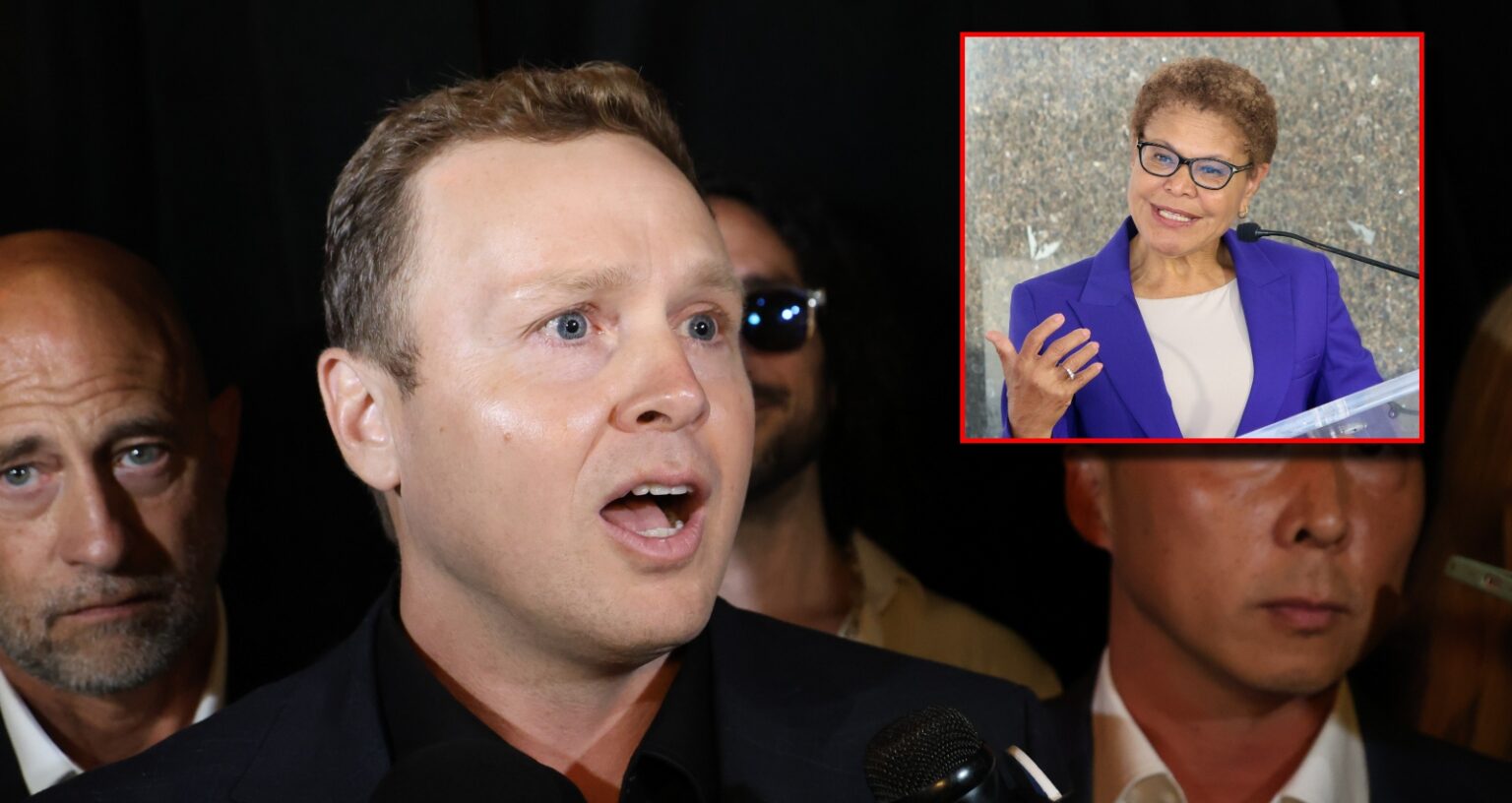
POLEMIC DELAYS AND THE SHIFTING GEOGRAPHY OF CALIFORNIA’S PRIMARY LANDSCAPE
By [Your Name/Professional Byline]
Special Investigative Report
LOS ANGELES, CA — June 6, 2026 — The immediate aftermath of an election is traditionally defined by finality—a swift consolidation of metrics, concession calls delivered from hotel ballrooms, and the immediate pivot to general election strategy. In California, however, election night is merely the opening sequence of a protracted, deeply polarized bureaucratic marathon. As of early Saturday, the political landscape of both the Los Angeles mayoral race and the California gubernatorial primary remains trapped in a state of suspended animation, exposing the deep institutional and cultural rifts that define the nation's most populous state.
Operating under California’s volatile top-two "jungle primary" system—where the top two finishers advance to the general election regardless of party affiliation—the sorting mechanism of West Coast democracy is facing unprecedented strain. While incumbent Democratic Mayor Karen Bass has comfortably secured her advancement to the November ballot in Los Angeles, the battle for the second runoff position has transformed into a high-stakes mathematical war. Right-leaning independent candidate and former reality television star Spencer Pratt, who posted a strong second-place finish in Tuesday’s initial count, is watching his lead bleed away. Hot on his heels is third-place finisher, socialist City Councilwoman Nithya Raman, who has utilized a massive influx of late-arriving mail-in ballots to aggressively narrow the gap.
This fluid local drama is mirrored at the state level, where a high-stakes gubernatorial proxy war to succeed Governor Gavin Newsom has left political analysts and party insiders in a state of high anxiety. Republican Steve Hilton currently maintains a razor-thin lead over former Health and Human Services Secretary Xavier Becerra.
The slow pace of the tabulation has drawn national scrutiny, culminating in a furious rhetorical broadside from former President Donald Trump, who has alleged systemic fraud and asserted that the U.S. Department of Justice is actively monitoring the count. As county clerks labor through mountains of paper ballots, the Golden State has once again become the epicenter of a fierce national debate over election integrity, administrative competence, and the structural rules of engagement in American democracy.
PART I: THE LOS ANGELES MAYORAL SQUEEZE — POPULISM VS. PROGRESSIVISM
To understand the profound tension reverberating through Los Angeles City Hall, one must parse the precise mathematical reality of the ongoing ballot tabulation. The initial returns on Tuesday night painted a picture of a major populist breakthrough. Spencer Pratt, running an aggressive campaign targeting civic stagnation, public safety anxieties, and economic mismanagement, commanded a clear lead for the second runoff position. For a city long dominated by traditional progressive forces, Pratt's early performance represented a significant electoral shock.
However, in California, early leads are frequently written on water. Under state law, mail-in ballots postmarked by Election Day can arrive up to seven days later and still be legally counted. This extended window systematically benefits progressive and grassroots left-wing organizations, which historically excel at late-stage ballot-chasing operations.
LOS ANGELES MAYORAL PRIMARY: THE CLOSING GAP
====================================================================
Reporting Period    Spencer Pratt (Ind/Right)    Nithya Raman (Socialist)
--------------------------------------------------------------------
Previous Tally      157,116 votes                119,809 votes
Latest Tally        163,549 votes                130,473 votes
--------------------------------------------------------------------
Net Gain            +6,433 votes                 +10,664 votes
====================================================================
Source: Los Angeles County Registrar-Recorder and County Clerk Logs
The latest data dropped a definitive hammer on Pratt’s early momentum. The Los Angeles County Registrar-Recorder and County Clerk's latest update reveals that Pratt remains in the lead for the second slot with 163,549 votes, compared to 130,473 votes for Raman. On paper, Pratt maintains a lead of nearly six percentage points. Yet, a forensic look at the archived vote totals exposes a brutal trendline for the right-leaning challenger.
In the previous reporting period, Pratt held 157,116 votes to Raman’s 119,809. In the newest batch of processed ballots, Raman gained more than 10,000 votes, while Pratt added fewer than 6,000 votes over the same period. This stark 2-to-1 ratio in favor of the socialist incumbent indicates that the remaining uncounted mail-in backlog is overwhelmingly progressive.
Pratt's campaign is facing a structural ceiling. While his message resonated deeply with early, in-person voters and traditional center-right enclaves, the vast reservoir of late-arriving mail-in envelopes is functioning as an electoral counter-strike. For Mayor Karen Bass, who has already amassed an unassailable mountain of votes to guarantee her name on the November ticket, the identity of her autumn opponent remains a critical variable. Will she face a populist outsider who can mobilize right-leaning and moderate discontent, or will she be forced into a grueling intra-party war against an energized democratic socialist base? The answer is buried deep within thousands of unverified signatures currently sitting in the L.A. County processing facility.
PART II: THE JUNGLE PRIMARY MATRIX AND THE "LATE BLUE SHIFT"
The structural volatility observed in Los Angeles is an inevitable byproduct of California’s unique electoral infrastructure. The top-two open primary system—frequently referred to as the jungle primary—demolished traditional partisan nominating contests. By forcing all candidates, regardless of party, onto a single ballot and advancing only the top two finishers, the system creates extreme strategic anxiety and operational bottlenecks, particularly when combined with the state's aggressive use of universal mail-in voting.
The core logistical challenge lies in the tension between voter access and administrative speed. In many states, the vote count is finalized within hours of poll closures because mail-in ballots must be received by election night. California has explicitly chosen a different path, prioritizing the enfranchisement of mobile and non-traditional voters over immediate media finality.
The Postmark Grace Period: Ballots must be postmarked by Election Day but have a full seven-day window to arrive via the U.S. Postal Service.
The Signature Verification Gauntlet: Every single mail-in envelope requires comparison and verification by county officials.
The Proportional Volume: With state officials warning that tallying the mail-in ballots for the elections may take weeks, the sheer physical volume of paper that must be scanned, verified, and tabulated is staggering.
Critics of this system contend that the resulting delays are not merely inconvenient but fundamentally dangerous to public trust. When an election night lead can be systematically eroded over the course of a week by repeated "ballot dumps," it creates an informational vacuum. In that vacuum, skepticism thrives. For conservative and right-leaning candidates, the "late blue shift" is frequently interpreted not as the slow accumulation of legal mail, but as a systemic flaw that distorts the immediate expression of the electorate.
PART III: THE GUBERNATORIAL PROXY WAR — HILTON VS. BECERRA
While the mayoral battle occupies the municipal spotlight, an equally intense and structurally parallel drama is unfolding across California’s fifty-eight counties. The race to succeed the term-limited Gavin Newsom as governor has become a critical national proxy war. Following a chaotic primary characterized by the sudden shift of early frontrunners, the final tally has narrowed to a tight three-way standoff.
As of the latest official updates, Republican Steve Hilton holds a narrow, heavily contested lead at the top of the field. Backed by a full endorsement from President Donald Trump, Hilton has successfully consolidated the state's conservative base, utilizing his media background to mount a disciplined challenge against the state’s political establishment.
CALIFORNIA GUBERNATORIAL PRIMARY: STATEWIDE TALLY
====================================================================
Candidate          Party Affiliation    Current Vote Total
--------------------------------------------------------------------
Steve Hilton       Republican           1,533,435 votes
Xavier Becerra     Democrat             1,470,100 votes
Tom Steyer         Democrat             1,139,517 votes
====================================================================
Source: California Secretary of State Logs
Hilton currently sits at 1,533,435 votes, maintaining a slim edge over former Health and Human Services Secretary Xavier Becerra, who trails closely with 1,470,100 votes. Billionaire Democratic activist Tom Steyer occupies the third position with 1,139,517 votes, leaving him on the outside looking in as the top two positions begin to solidify.
STATEWIDE VOTE DIFFERENTIALS
--------------------------------------------------------------------
Hilton vs. Becerra Margin:   +63,335 votes (Republican Advantage)
Becerra vs. Steyer Margin:  +330,583 votes (Democratic Establishment Advantage)
--------------------------------------------------------------------
The political implications of these numbers are profound. For California Democrats, who command a massive voter registration advantage across the state, the fact that a Trump-endorsed conservative is leading the primary ticket is a stark reminder of the party’s internal fractures. Now, as the slow counting process drags forward, Becerra’s campaign is relying entirely on the same late-arriving mail-in dynamic that is reshaping the L.A. mayoral race. While Hilton’s base turned out with high intensity early, the urban centers are expected to deliver a steady stream of progressive mail over the coming days, threatening to erase Hilton’s 63,000-vote cushion.
PART IV: THE TRUMP BROADSIDE AND THE DEMAND FOR THE SAVE AMERICA ACT
The fluid situation and prolonged tabulation timelines in California have caught the attention of national political figures, escalating a regional administrative challenge into a full-blown national security and legislative battleground. On Thursday, former President Donald Trump launched a blistering series of posts on his Truth Social platform, directly targeting the integrity of the West Coast vote counting process.
Trump explicitly accused California Democrats of weaponizing the delayed tabulation to "steal" the elections away from both Steve Hilton and Spencer Pratt. More significantly, Trump asserted that the situation had escalated to the level of federal criminal scrutiny, claiming that the U.S. Attorney’s Office in Los Angeles was actively investigating the delays.
"The Dumocrats are at it again! They are trying to STEAL THE GOVERNOR OF CALIFORNIA PRIMARY, AND THE MAYOR OF LOS ANGELES, PRIMARY, AWAY FROM TWO GREAT REPUBLICAN CANDIDATES. Here we go with the very late and massive numbers of MAIL IN BALLOTS," Trump posted early Thursday morning.
He followed up shortly after, writing:
"There’s BIG cheating by the Dumocrats in California. Votes are all tied up. May not be in for weeks. Under investigation by the U.S. Attorney’s Office in Los Angeles. Why the vote counting DELAY???"
TRUMP'S ELECTION INTEGRITY DISRUPTION TIMELINE (THURSDAY)
====================================================================
[08:15 AM]  --> Alleges systematic "theft" via late mail-in ballot numbers.
[09:30 AM]  --> Claims active U.S. Attorney investigation in Los Angeles.
[03:45 PM]  --> Launches formal legislative push for the SAVE AMERICA ACT.
====================================================================
By Thursday afternoon, Trump shifted from rhetorical condemnation to a concrete policy demand, leveraging the California primary delays as a real-time case study to pressure congressional Republicans into passing sweeping federal voting legislation known as the Save America Act.
"Look what’s happening in California, the Dumocrats, right before our very eyes, are stealing the Vote. I hope the Republicans are watching so that they can finally pass THE SAVE AMERICA ACT!" Trump asserted.
According to Trump's public directives, the Save America Act represents a total overhaul of the American electoral apparatus, seeking to replace state-level accommodations with strict federal compliance measures. The proposed legislation includes several core mandates designed to eliminate the exact vulnerabilities currently being debated in Sacramento and Los Angeles:
Mandatory Photo Identification: Requiring all voters across the United States to present a valid photo ID at the polls.
Proof of U.S. Citizenship: Implementing a strict statutory requirement that all individuals provide documented proof of legal citizenship during voter registration.
Severe Mail-In Voting Restrictions: Outlawing universal loopholes, narrowing the postmark arrival window, and banning unverified mail-in ballot expansions.
Culture War Policy Riders: In a move that highlights the deeply ideological nature of the bill, Trump explicitly hitched several unrelated social conservative priorities to the election security package, including a total federal ban on transgender surgeries for children and a prohibition against men participating in women's sports categories.
While federal law enforcement and the U.S. Attorney's Office in Los Angeles have maintained their traditional policy of non-comment regarding potential investigations, the political damage was instantly done. By framing the standard, legally authorized processing of mail-in ballots as an ongoing crime, Trump has successfully mobilized his base to view the final certified tallies in California with deep suspicion, creating a highly volatile backdrop for the general election in November.
PART V: THE INSTITUTIONAL DEFENSE AND THE VOTE-COUNTING REALITY
Faced with a mounting public relations crisis and a barrage of national fraud allegations, the California institutional apparatus has mounted an aggressive counter-offensive to protect the legitimacy of its democratic systems. At the center of this defensive effort is the executive mansion in Sacramento. Democratic Governor Gavin Newsom has come out in firm defense of the state's ballot counting pace as critics claim the process reeks of corruption.
To push back against the viral social media narratives, Newsom’s communications team took the unusual step of publishing a highly polished "explainer" video across major digital networks. The video featured prominent CNN correspondent Elex Michaelson, who provided a detailed breakdown defending the state's slow count as baked entirely into California law.
The institutional defense centers on several unyielding operational realities that are frequently ignored in the heat of partisan warfare:
The Scale of the Population: The sheer physical footprint of managing millions of paper documents across separate county jurisdictions dwarfs the electoral infrastructure of almost every other state in the union.
The Rigor of Signature Verification: Unlike states that utilize immediate electronic scanning, California law mandates a multi-tier signature and verification process to protect legal voters.
The Seven-Day Arrival Window: Because ballots can legally arrive up to seven days after the polls close as long as they are postmarked by Election Day, it is mathematically impossible for a county clerk to issue a final, certified tally within the first 48 to 72 hours. Registrars are legally barred from rushing the process.
By framing the slow count as a legal mandate rather than an administrative failure, the Newsom administration is attempting to build an informational firewall around the primary results. However, the political reality remains precarious. As long as the numbers continue to fluctuate between high-profile populist challengers like Spencer Pratt and progressive incumbents like Nithya Raman, the technical defense of the election code will continue to clash directly with the raw emotional demands of an anxious and deeply divided electorate.
PART VI: STRATEGIC OUTLOOK AND THE ROAD TO NOVEMBER
As the processing machines continue to hum in the basement of the Los Angeles County Registrar’s office, political strategists from all factions are already drafting blueprints for the general election cycle. The structural dynamics revealed by this primary count offer a preview of the high-intensity warfare that will consume the Golden State over the next five months.
For Spencer Pratt, the strategic path forward is entirely dependent on his ability to preserve a fraction of his remaining six-point lead. If he can withstand the late-ballot surge from Nithya Raman and secure the second runoff slot alongside Karen Bass, his campaign will represent a historic test case for right-leaning populism in an overwhelmingly blue metropolis. Pratt will likely position himself as the voice of a neglected moderate-to-conservative coalition, attempting to channel widespread voter anger over civic mismanagement. However, if Raman’s late mail-in numbers continue their aggressive trajectory, Pratt's political experiment will serve as a stark warning to future outsiders regarding the absolute supremacy of the progressive ground game and ballot-chasing apparatus.
At the statewide level, the impending general election matchup will carry massive national implications. Even if Xavier Becerra successfully closes the gap to overtake Steve Hilton for the symbolic first-place finish in the primary, the general election will be a grueling ideological battle. Hilton will enter the autumn campaign with the full institutional backing of the national Republican apparatus and a mobilized rural and suburban base that feels entirely alienated by Sacramento's progressive policy agenda. He will use the slow primary count and economic concerns to construct an aggressive populist narrative.
Conversely, Becerra will fall back on California's formidable structural defenses. With a massive voter registration advantage and an institutional network that spans major labor unions and progressive donors, the traditional Democratic machine remains an incredibly difficult fortress to breach.
Ultimately, the true legacy of the June 2026 primary may not lie in the identity of the specific candidates who advance, but in the permanent transformation of the electoral process itself. The intense polarization surrounding the ballot counting timeline has solidified election administration as a primary campaign issue. Whether California's slow, meticulous, access-first model remains the standard of democratic enfranchisement or becomes the ultimate catalyst for systemic skepticism depends entirely on the transparency, accuracy, and absolute accountability of the county officials currently tallying the remaining votes. As the nation watches the numbers slowly shift, the Golden State continues to prove that in modern American politics, the ultimate battle is no longer fought on the campaign trail—it is fought envelope by envelope, signature by signature, in the quiet, methodical halls of the registrar’s office.


.png)


.jpg)

.jpg)

0 commentaires:
Enregistrer un commentaire