
Donald Trump, the former President of the United States, has once again directed public criticism at a prominent journalist. This time, he targeted Maggie Haberman, a well-known White House correspondent for The New York Times.
Haberman, who has reported on multiple administrations, has occasionally faced criticism from Trump in the past, but the intensity of his recent remarks reflects a continuation of his long-standing tension with reporters he perceives as unfavorable.
On March 6, 2026, Trump used his platform on Truth Social to publicly denounce Haberman. In the post, he referred to her using derogatory language and suggested potential legal action against her and her colleagues.
The former president wrote, “Maggot Hagerman, just another SLEAZEBAG writer for The Failing New York Times, insists on writing false stories about me, even though she fully knows and understands that the exact opposite of anything she says is usually the truth.”
Trump continued, claiming that he might include Haberman and some of her associates in his ongoing Florida-based lawsuit against The New York Times. He concluded the post with, “Thank you for your attention to this matter! President DJT.”
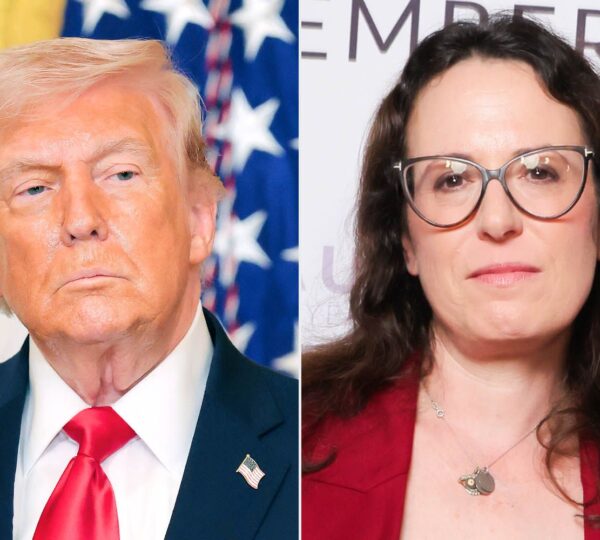
Observers note that while Trump’s post was sharply critical, he did not provide a clear explanation for the specific incident or reporting that provoked his reaction toward Haberman this time.
Historically, Trump has expressed public hostility toward journalists who ask difficult questions or publish reporting that portrays him unfavorably. Female correspondents have been a notable target in recent years.
For instance, in December 2025, CNN White House correspondent Kaitlan Collins was publicly criticized by Trump. He called her “stupid and nasty” during a White House interview, later criticizing her demeanor and public presence.
Earlier, in February 2026, Trump also interrupted Washington Post reporter Natalie Allison aboard Air Force One when she asked questions about his administration’s deportation policies. He quickly cut her off and dismissed her inquiry.
During that exchange, Trump remarked, “Well, you’re having a hard time getting readers. The Washington Post is doing very poorly. Go ahead. You have a very bad attitude. Go ahead,” a comment widely reported in major news outlets.
These incidents reflect a broader pattern in which Trump has frequently used public platforms to express his displeasure with journalists. Social media posts, public interviews, and press conference interactions have all served as channels for these critiques.
Maggie Haberman, who became the latest target, is a Pulitzer Prize-winning journalist. Her reporting has included investigative work on Trump’s advisors and connections with foreign entities, work that has drawn both acclaim and controversy.

Haberman’s reporting on Trump has often been detailed and widely cited. She is recognized for her coverage of political scandals, internal White House dynamics, and policy developments, sometimes earning praise from peers for investigative depth.
In addition to her reporting, Haberman is an accomplished author. She published the biography “Confidence Man: The Making of Donald Trump and the Breaking of America” in 2022, which provided extensive insight into Trump’s business and political career.
According to media reports, Haberman is also working on a new book alongside a New York Times colleague. The upcoming publication is expected to include details about Trump’s post-presidency activities and internal political dynamics.
The specific trigger for Trump’s recent attack remains unclear. Some analysts suggest it may relate to a recent story published on March 5, 2026, which covered the firing of Homeland Security Secretary Kristi Noem, an action linked to Trump’s political strategy.
Observers note that Trump’s public criticisms often mix personal invective with political argumentation. Terms such as “maggot” and “sleazebag” in his Truth Social post are consistent with language he has used toward journalists in the past.
Experts on media relations emphasize that public figures’ attacks on reporters can have multiple impacts, including shaping audience perception, influencing political narratives, and potentially intimidating journalists from pursuing certain lines of inquiry.
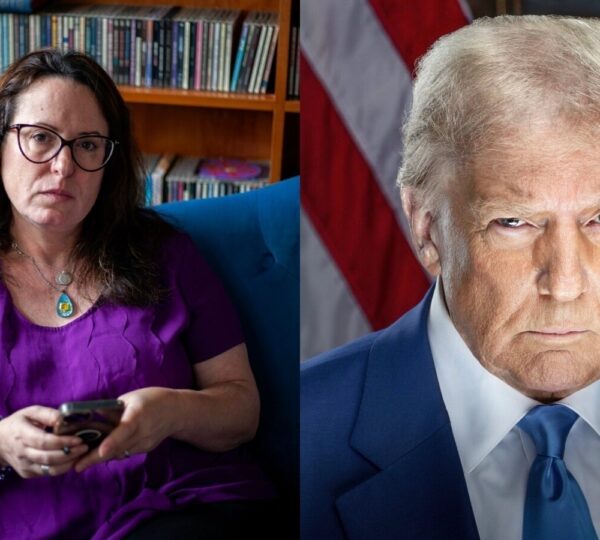
Throughout his presidency and post-presidency, Trump has repeatedly highlighted his dissatisfaction with major media outlets. The New York Times, CNN, and The Washington Post have frequently been described by Trump as “fake news” or biased against him.
Haberman’s reporting, which has often presented investigative findings that contrast with Trump’s public statements, likely positions her in the crosshairs of his social media criticism. Her coverage of political scandals and campaign dynamics has been widely cited by major media organizations.
Some media observers suggest that the tension between Trump and Haberman is also symbolic of a broader clash between the political establishment and investigative journalism, reflecting deeper ideological and partisan divides.
Haberman’s career at The New York Times has included multiple high-profile stories that have drawn attention both nationally and internationally. Her investigative reports frequently involve in-depth interviews, document analysis, and corroborated insider accounts.
Her reporting on Russian influence within the Trump administration was among the work that led to her Pulitzer Prize recognition. Such stories often involve complex sourcing, legal review, and meticulous editorial oversight.
Trump’s public attacks on female journalists are not limited to Haberman. Several women reporters have faced criticism for challenging him in public forums or for reporting on stories he considers unfavorable.
While some critics of Trump argue that his attacks constitute harassment or intimidation, others contend that public figures have historically disputed negative coverage, though the intensity and frequency of Trump’s criticisms have been unprecedented in the modern era.
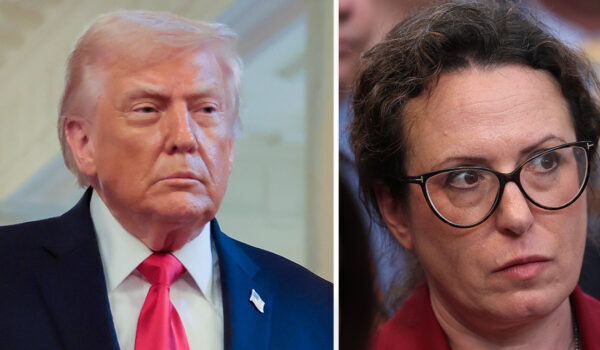
Legal experts note that Trump’s claims about potential lawsuits, while publicized on social media, involve complex considerations. Suing a journalist or media outlet in the United States requires demonstrating defamation or harm under strict legal standards.
Many journalists view such threats as part of a broader pattern of posturing rather than immediate legal action. Historically, Trump has filed lawsuits against media organizations, though many were dismissed or settled without major precedent.
Maggie Haberman herself has responded to criticism by continuing her reporting and publication efforts, demonstrating a commitment to journalistic principles and investigative reporting despite public attacks from political figures.
Observers also point out that Trump’s criticism on Truth Social reflects a broader strategy of using social media platforms to directly communicate with supporters, bypassing traditional media filters and editorial controls.
The March 6 post marks one of several in which Trump has combined personal attacks with discussion of potential legal action, illustrating his preferred method of public communication outside formal press conferences.
Media analysts suggest that the post could have multiple effects, including rallying his base, shaping political narratives, and signaling discontent with the way certain stories are reported.
While the motivation for targeting Haberman remains speculative, her high-profile reporting and upcoming book projects suggest she continues to be an influential figure in political journalism.
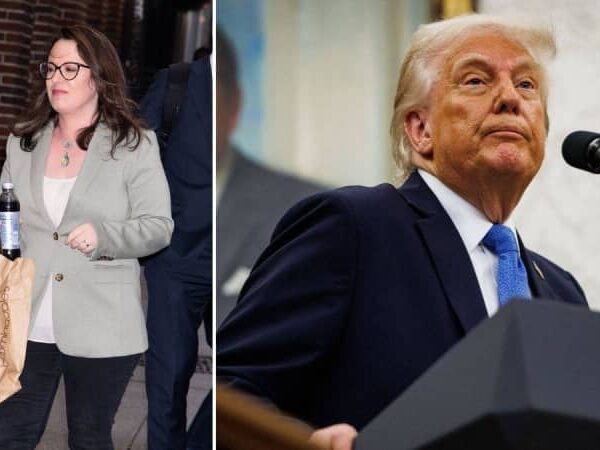
Her coverage of White House decisions, policy changes, and personnel moves provides readers with insights that may not be available through official communications or press releases.
For the public, Haberman’s reporting offers context and perspective on political events, helping citizens understand the implications of executive actions and political decisions.
Her biography and investigative work also serve as historical documentation of Trump’s presidency and post-presidential activities, often cited by academics, journalists, and policymakers.
The relationship between political figures and journalists is inherently complex, especially in situations involving contentious policy decisions or controversial actions. Haberman’s reporting reflects the traditional role of the press in holding leaders accountable.
In recent months, Trump’s attacks on journalists like Kaitlan Collins, Natalie Allison, and Maggie Haberman highlight ongoing tensions between political leaders and the media landscape in the United States.
Media experts emphasize that female journalists, in particular, often face disproportionate scrutiny and personal attacks, which can compound challenges associated with reporting in high-pressure environments.
Observers note that Haberman has maintained a consistent reporting style, combining factual investigation with careful attribution and sourcing, which aligns with professional journalistic standards.
The ongoing critique by Trump underscores the adversarial relationship between some public figures and investigative reporters, highlighting challenges faced by journalists operating under intense public scrutiny.
Despite threats and insults, journalists like Haberman continue to pursue stories of public interest, reflecting the broader mission of accountability and transparency in democratic societies.
For the American public, this situation serves as a reminder of the important role of journalism in providing checks and balances on political power, particularly during contentious periods.
Haberman’s coverage of political controversies, biographies, and insider reporting continues to shape public understanding and inform debates surrounding governance, policy, and presidential influence.
Analysts suggest that Trump’s criticism may also reflect his broader strategy of controlling media narratives and influencing public perception through direct communication channels like social media.
As the media landscape evolves, the tension between journalists and political leaders is likely to remain a prominent aspect of American political life, with high-profile reporters and former presidents often at the center.
The ongoing dialogue between Trump and journalists, particularly women reporters like Haberman, illustrates how public figures engage with media coverage while navigating criticism, reputation management, and political strategy.
For students of journalism, political science, and media studies, the interactions between Trump and reporters provide a case study in the interplay between social media, investigative reporting, and public opinion.
Haberman’s reporting, legal considerations surrounding media criticism, and the implications of Trump’s public posts remain topics of interest for analysts and news consumers alike.
Looking forward, her continued coverage, upcoming publications, and investigative reporting are expected to remain in the public spotlight, particularly as Trump continues to participate in political discourse and public commentary.
In conclusion, the ongoing interactions between Donald Trump and Maggie Haberman exemplify the complex, often contentious relationship between high-profile political figures and the press in modern American politics.


.jpg)

.jpg)
.jpg)

0 commentaires:
Enregistrer un commentaire